
March 13, 2026
DevOps Checklist for Scaling SaaS Teams
Enjoying this article?
Share it with the world!


Building Scalable SaaS with DevOps Practices
In the early days of the SaaS product, development teams were agile with little operational structure. There are a few developers to manage deployments, and the infrastructure is minimal with rapid release cycles. But as the SaaS product grows, so does the complexity.
With more and more users and larger development teams, there is pressure on infrastructure and release cycles. This is where an effective DevOps checklist for scaling SaaS teams is required. It is required to develop robust deployment pipelines and infrastructure with operations that are stable and support growth while not impeding development.
Already facing scaling friction? Get DevOps advice
Why DevOps Becomes Critical for Scaling SaaS Companies
As the SaaS business grows, so does the complexity of the engineering stack. The SaaS business that was originally built with one application may now have multiple applications, services, and databases. All these are connected and interact with one another in such a way that the behavior of the system is no longer predictable. On the other hand, the development team is also increasing.
More developers are committing code every day. The more developers there are, the more integration conflicts there could be. Without automation, this could result in slower release cycles and/or operational risks.
📊 DORA research snapshot
According to research conducted by the DevOps Research and Assessment (DORA) program, organizations that have adopted DevOps best practices have achieved higher rates of software deployment and have been able to recover quickly. This has helped SaaS companies achieve speed and stability.
high-performers deploy 208x faster
As the SaaS business grows, so does the complexity of the engineering stack. The SaaS business that was originally built with one application may now have multiple applications, services, and databases. All these are connected and interact with one another in such a way that the behavior of the system is no longer predictable.
On the other hand, the development team is also increasing. More developers are committing code every day. The more developers there are, the more integration conflicts there could be. Without automation, this could result in slower release cycles and/or operational risks. According to research conducted by the DevOps Research and Assessment (DORA) program, organizations that have adopted DevOps best practices have achieved higher rates of software deployment and have been able to recover quickly. This has helped SaaS companies achieve speed and stability.
🔮 Gartner forecast — platform engineering
According to Gartner, “by 2026, 80% of software engineering organizations will establish platform teams as internal providers of reusable services, components and tools for application delivery.” This aligns with the platform engineering checklist below. Adopting platform engineering is critical for SaaS teams scaling efficiently.
2026 projection · platform teams
Signs Your DevOps Team Is Not Ready to Scale
Before expanding the infrastructure or introducing additional tools, the SaaS leaders must give thought if their DevOps environment is ready for scaling. One obvious indication of inefficiency is the slow roll-outs. Should the releases be dependent on manual approvals, have long maintenance windows, or need complex coordination between the teams, it will become really hard to scale. There will be another problem if the environments perform differently. Development, staging, and production should be almost identical, and if it is not the case, the teams in most cases find the problems after releasing the code to production. Besides, limited monitoring might lead to the creation of operational blind spots. Whenever engineers depend on customer complaints for detecting system failures, this is a sign that the level of observability is low.
Spot any of these warning signs? Talk to an expert
Sudden increases in traffic usually uncover even more faults. When the scaling of the infrastructure is necessarily followed by manual intervention, the platform will most probably not be capable of coping with the unexpected high demands. All the above-mentioned indications make it clear that engineering teams will definitely require a well-structured DevOps readiness checklist if their SaaS product is to be further developed.
DevOps Checklist for Scaling SaaS Teams
Scaling SaaS platforms requires coordinated improvements in infrastructure, development workflows, and operational processes. The following checklist highlights the key areas engineering teams should evaluate.
DevOps Infrastructure Readiness
Infrastructure as Code: A good DevOps infrastructure readiness process starts with Infrastructure as Code. This is where the infrastructure is not set up manually. Instead, it is set up using code. For example, Terraform or AWS CloudFormation is used.
Automated scaling: Automated scaling is an important feature. This is where the cloud infrastructure scales resources dynamically. This way, it is easy to handle spikes in traffic without affecting the performance.
Containerization: Containerization is another feature that has been adopted by most SaaS applications. This is where containers are used. They provide consistent environments. This makes it easy to deploy applications across various systems.
CI/CD Readiness Checklist
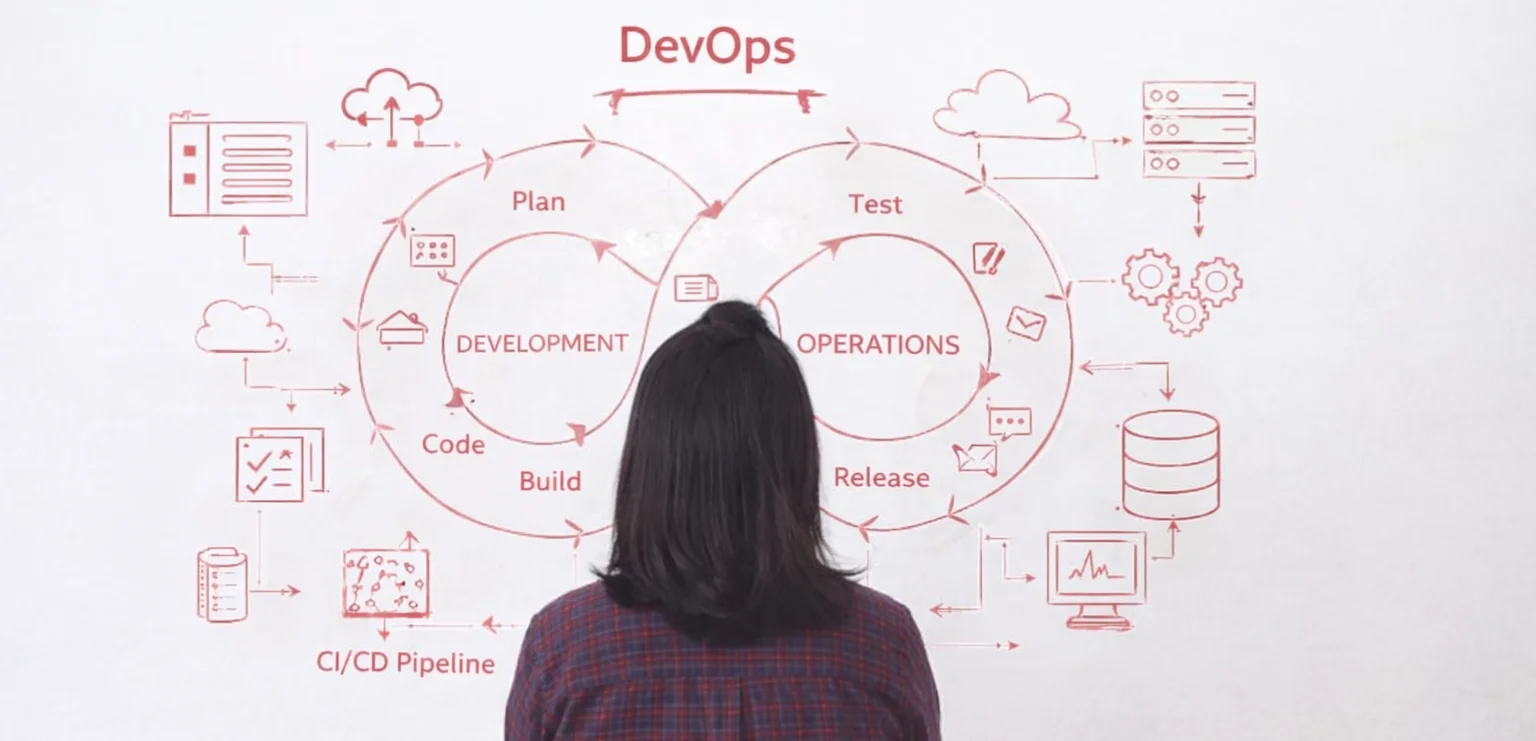
Automated builds, automated tests and deployment pipelines: which need to test all code before its deployment to production as part of a reliable SaaS deployment strategy. The testing process needs to start when a code commit occurs, which will test the code to confirm its functionality.
Automated tests must also be a priority for growing SaaS products. This will allow unit tests, integration tests, security tests, and others to run automatically as part of the pipeline process.
Rollback must also be supported. In the event that the deployment causes instability in the system, it must be possible to revert to the previous version.
Feature flags add another layer to the systems. Instead of releasing major code to all users, the developers can release the feature gradually. Therefore, with these systems in place, SaaS products can be released faster while ensuring the reliability of the systems.
DevOps Platform Engineering Checklist
Internal platforms:
As the number of people in a development team increases, managing infrastructure becomes cumbersome. Developers may spend too much time managing infrastructure instead of creating product features. A DevOps platform engineering checklist revolves around creating internal platforms that offer standardized tools for developers and infrastructure automation. This allows developers to use these internal platforms to easily create infrastructure, deploy applications, and manage infrastructure.
Instead of each team in an organization trying to solve infrastructure problems, a team of people works on creating a solution for the entire organization. This boosts productivity when scaling a DevOps team because developers can now focus on creating applications.
DevOps Operational Checklist
Monitoring & observability:
Operations become more critical when the SaaS platforms are serving more and more users. A good DevOps operational checklist includes DevOps monitoring tools, incident management processes, and automated alert systems.
Monitoring systems can track metrics like response time, system load, and error rates in real time. Observability platforms can provide more in-depth information by using log monitoring, metrics monitoring, and trace monitoring. These platforms can help the team understand the interaction of the services and can help them identify the performance bottlenecks.
Runbooks: Another significant operational asset is runbooks. These are the documents that provide guidance for resolving commonly occurring incidents.
DevOps Metrics for Scaling SaaS Teams
Deployment frequency
How often your team deploys to production
High-performing teams deploy on demand (multiple times per day). Frequent, small deployments reduce risk and accelerate feedback.
Mean time to recovery (MTTR)
Time to restore service after an incident
Elite performers recover in under one hour. Low MTTR indicates mature observability and incident response.
Change failure rate (CFR)
Percentage of changes causing degradation
Low CFR (0–15%) signals robust testing and safe deployments. High CFR slows down innovation.
Lead time for changes
Time from code commit to running in production
Elite teams have lead times of less than one hour. Short lead time enables fast iteration and competitive advantage.
Key DevOps metrics for SaaS team scaling include deployment frequency, mean time to recovery, change failure rates, and lead time for changes, which are often used in a DevOps maturity model. Deployment frequency refers to the number of times a team deploys updates. High-performing teams prefer to deploy small updates frequently because it reduces the risks involved. Mean time to recovery refers to the time it takes for a team to recover after a failure. The lower the time to recovery, the better the maturity of a team.
From checklist to execution Contact DevOps team
Conclusion
The DevOps checklist which SaaS teams use to scale their operations, provides organizations with a system to enhance their CI/CD pipelines, automation, and infrastructure automation and monitoring capabilities together with performance tracking systems. The efficient scaling of SaaS companies depends on their ability to maintain high performance standards through their delivery of software updates, which they accomplish by using a solid DevOps foundation.

IBS
Similar articles

When Should a SaaS Company Hire a DevOps Consulting Partner?
February 18, 2026
How to Reduce Deployment Downtime Using DevOps Automation
February 13, 2026
DevOps Challenges After Series A, B, and C Funding
February 9, 2026
CI/CD Pipeline Automation Best Practices for SaaS Teams
February 4, 2026
How DevOps Reduces Cloud Infrastructure Costs for SaaS
January 30, 2026
DevOps for High-Growth SaaS: Reducing Costs, Downtime, and Deployment Risk
January 26, 2026
