
February 23, 2026
Is Your DevOps Pipeline Ready for 2026?
Enjoying this article?
Share it with the world!


DevOps Pipeline Readiness for 2026: Key Trends & Checklist
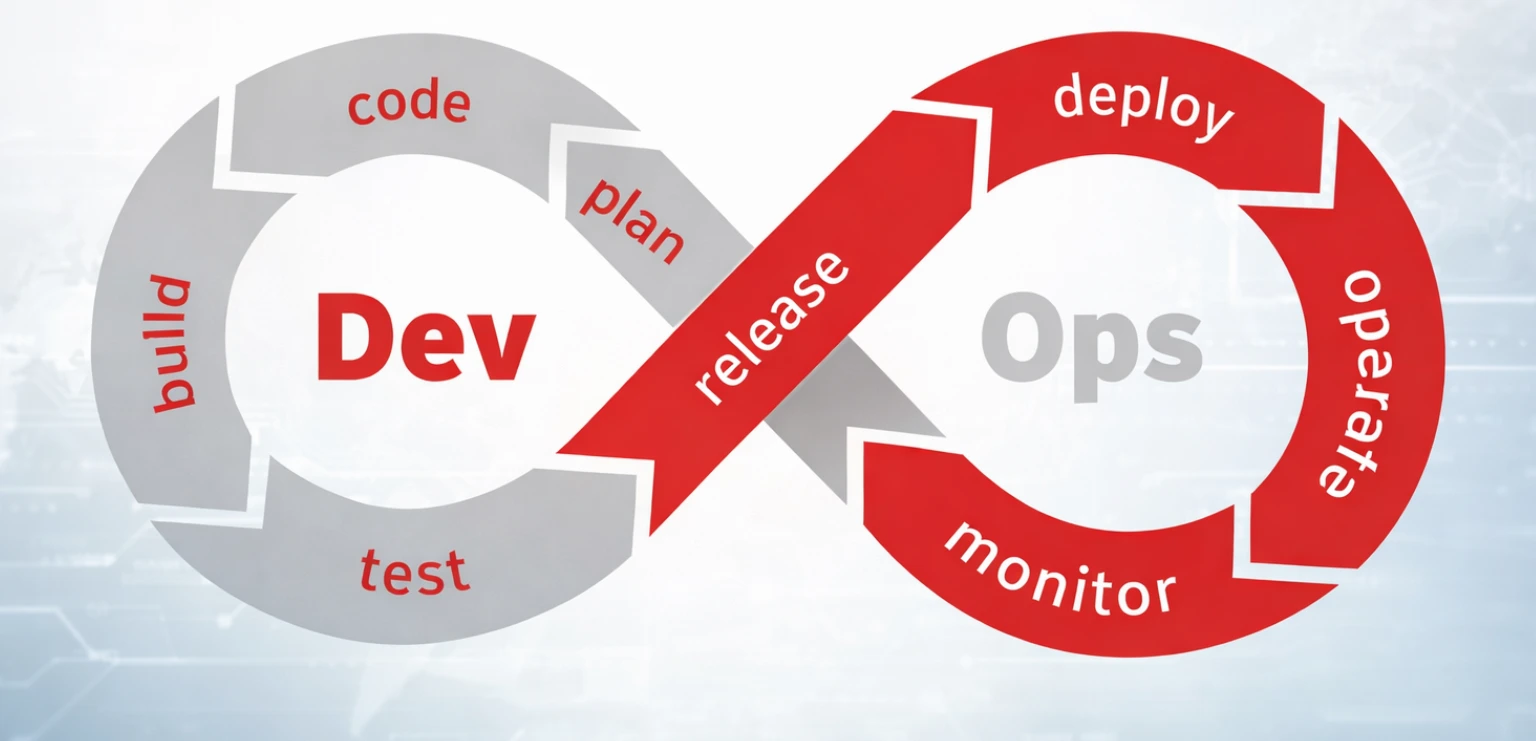
DevOps pipelines have moved a long way from what started out as a basic collection of scripts with manual intervention. Now we have complex and highly automated pipelines that cover security, deployment reliability, and so much more. But in 2026, things are set to change again.
A modern DevOps pipeline doesn’t just mean faster deployment. It means DevOps pipeline readiness, scalability, security, developer experience, AI, and more. To remain competitive, SaaS-based companies need to assess if their setup is for tomorrow and not just for solving problems they face today.
80%
of software engineering organizations
will have a team dedicated to platform engineering by 2026 — Gartner
This shows that platforms are becoming internal developer products again, rather than the assembly line of scripts and tools.
In this article, let’s first look at the key signs of DevOps pipeline modernization needs and then, after those, the steps for assessing CI/CD pipeline readiness for 2026.
Trend 1: From Toolchains to Internal Developer Platforms
Traditional DevOps pipelines were fundamentally assembled through the stitching together of a set of tools, version control, build systems, etc. This model, whilst successful at smaller scales, is beginning to experience problems as systems become larger, especially within a SaaS DevOps pipeline.For 2026 and beyond, the notion of a DevOps pipeline is evolving to a concept called an Internal Developer Platform (IDP). The DevOps environment is no longer a handful of tools, but rather a platform that is:
- ✅ Lets developers deploy without tickets or manual steps
- ✅ Provides Automated Governance and Compliance Checks
- ✅ Offers Standardized Environments and Patterns
This transformation clears the way to enable a future-ready DevOps pipeline in which application developers can develop applications quickly while remaining reliable and secure. In our article on GitHub Actions vs Jenkins for SaaS CI/CD Pipelines, we discussed what matters in the current day when it comes to tooling. What will matter in 2026, however, are the platforms that integrate such tooling to enhance delivery.
Trend 2: Automation and AI-Driven Intelligence in Pipelines
In 2026, the automated applications would not only be restricted to the build and deploy process. Instead, AI and intelligent systems would begin to take over tasks previously performed by humans:
🔮 Predicting pipeline failures before they happen
⚙️ Offering proposed automated fixes or remedial steps
🧪 Intelligently generating test cases
📊 Optimizing resources based on historical data
Such AI-driven DevOps capabilities would assist in DevOps automation readiness without adding more human resources, which is a major consideration for scaling SaaS companies. Indeed, as current trends dictate, we expect AI to penetrate DevOps processes extensively, be they related to software observability, incident detection, or code analysis. In order for your pipeline to be production-ready by 2026, it is necessary that your pipeline is able to support the integration of AI tools and models, not just traditional CI/CD automation.
Trend 3: Security and Compliance Embedded Everywhere
Security used to be an activity that was a separate step, often located at the end of the process or as a gate before production. However, in 2026, security needs to be integrated throughout the DevOps security pipeline.
This means:
🔐 Policy-as-code
🛡️ Automated vulnerability scanning
🔑 Secrets management
🛡️ Zero Trust Checks
This method of “shift-everywhere” minimizes risk, reduces operational burdens, and reflects emerging regulatory models for SaaS applications. If your current pipeline depends upon manual security handoffs or has separate quality assurance processes, there’s a great likelihood that it will not be suitable in the next few years, which is what’s expected.
Trend 4: Scalability and Cloud-Native Expectations
The near future will be shaped by a cloud-native DevOps pipeline, no longer treated as an exception but as the default approach. This shift fundamentally changes how build, deployment, and scaling strategies are designed.
☁️ Microservices
🌐 Multi-cloud
🐳 Containers & serverless
🔄 Automated rollback
The pipelines need to be designed with the aim of being elastically scalable, able to accommodate more services, teams, and regions without the need for human assistance. A DevOps scalability assessment should also evaluate the following: Can the pipeline easily scale to sudden spikes in workloads or architecture changes? If it cannot, then it does require modernization. This is especially relevant when asking, “Is your SaaS DevOps pipeline scalable for 2026?”
Trend 5: Observability, Metrics, and Developer Experience
DevOps Pipeline readiness is not simply a matter of speed but rather a state characterized by understanding and confidence.
Future-ready pipelines will have:
- 📊 Real-time observability with traceability from commit to production
- ⏱️ Metrics for developer experience, such as provisioning time
- ❤️ Automated health checks and performance feedback
- 📈 Dashboards that correlate engineering outcomes with business impact
📋 DevOps Pipeline Readiness Checklist for 2026
📋 DevOps Pipeline Readiness Checklist for 2026
It may be useful to help leadership teams assess how to prepare DevOps pipelines for 2026 using this simple framework:
- 1 Integration with Platforms: Does your pipeline work as a self-service developer platform?
- 2 AI and Automation Support: Can your pipeline integrate with AI-driven tools?
- 3 Security Everywhere: Are security and compliance automated throughout?
- 4 Cloud-Native Compatibility: Does it support microservices, containers, multi-cloud?
- 5 Observability and Metrics: Do you have dashboards connecting deployment to business impact?
If the answer to any of these is “not yet,” that is an indication your pipeline needs modernization, not just upgrades.
Conclusion: Building a DevOps Pipeline That Goes Beyond 2026
Conclusion: Building a DevOps Pipeline That Goes Beyond 2026
We are entering an era in which DevOps pipelines will not be measured by speed or by the ability to automate; they will be measured by:
👥 Enable developers
🔒 Automatically maintain security
🤖 Support intelligent decision-making
📈 Scale across teams
💡 Drive business outcomes
This is what DevOps pipeline readiness for 2026 truly means. It’s not about which tool to choose or which tool to use; it’s about adapting to the requirements and changes of the upcoming era.
If you are considering which option to evaluate first, you might want to consider performing a DevOps readiness assessment or hiring experienced and knowledgeable consultants who can guide you through this process of mapping your current and future state with these aspirations.
Because in 2026, the pipeline is not just a path for some code, it is the backbone for reliable, efficient, and scalable software delivery.
Ready for 2026?
Get your personalized DevOps pipeline readiness score
Free 10-min evaluation · no commitment

IBS
Similar articles

DevOps Automation Mistakes That Cost SaaS Companies Millions
March 20, 2026
DevOps Checklist for Scaling SaaS Teams
March 13, 2026
When Should a SaaS Company Hire a DevOps Consulting Partner?
February 18, 2026
How to Reduce Deployment Downtime Using DevOps Automation
February 13, 2026
DevOps Challenges After Series A, B, and C Funding
February 9, 2026
CI/CD Pipeline Automation Best Practices for SaaS Teams
February 4, 2026
