DevOps for High-Growth SaaS: Reducing Costs, Downtime, and Deployment Risk
Table of Contents
- →Introduction: The Growth Gap in SaaS
- →Why DevOps Breaks Down as SaaS Companies Grow
- →Reducing Cloud Spend Without Slowing Teams Down
- →Downtime: A Revenue Problem, Not a Technical One
- →Managing Deployment Risk at High Velocity
- →Scaling DevOps Alongside Your Business
- →Signals It’s Time to Upgrade Your DevOps Approach
- →Measuring What Actually Matters: Key DevOps Metrics
- →The Real Impact: What Strong DevOps Enables
- →Final Thoughts: DevOps as a Growth Multiplier
DevOps for High-Growth SaaS: Cut Costs, Downtime & Risk
How to scale confidently while maintaining stability, reliability, and cost efficiency
High-growth SaaS companies are always moving. New users come in daily. Features are released often. Infrastructure grows faster than most teams expect. At first, this feels manageable. But growth has a way of exposing gaps.
Cloud bills rise without a clear reason. Downtime becomes more costly. Deployments stop feeling routine and start feeling risky. What once worked begins to show strain.
This is where DevOps for high-growth SaaS stops being a “nice to have” and starts becoming essential.
At Scale, DevOps Is About Reducing Uncertainty
Financial uncertainty. Operational uncertainty. Technical uncertainty. And doing that while still allowing teams to move fast without losing user trust.
Why DevOps Breaks Down as SaaS Companies Grow
Early-stage SaaS teams usually move quickly with simple processes. Deployments are often manual. Monitoring is limited. Cloud costs are tracked loosely, if at all. In the beginning, this is enough.
As growth accelerates, common DevOps challenges in high-growth SaaS begin to surface:
Without a clear DevOps scaling strategy, teams become reactive. Decisions are made under pressure. Downtime, surprise bills, and risky releases slowly become normal.
Reducing Cloud Spend Without Slowing Teams Down
There is a common belief that DevOps automatically increases cloud spending. In reality, the opposite is often true; how DevOps reduces cloud costs is one of its strongest business benefits.
Cloud Cost Optimization with DevOps
Key Insight: Reducing DevOps costs for SaaS does not mean cutting corners. It means spending with intent. Many SaaS companies see meaningful cost reductions once visibility and automation improve. That is why DevOps cost optimization services and cloud cost optimization consulting are often part of growth planning, not just cleanup work.
Downtime Is a Revenue Problem, Not a Technical One
For a SaaS business, downtime is never just a system issue. It affects trust. Users expect availability. As competition increases, patience decreases. Even short disruptions can leave a lasting impression.
Systems are monitored continuously. Alerts surface issues early. Infrastructure is built to recover instead of waiting for manual fixes.
This is where DevOps reliability engineering becomes important. Reliability is designed into the system, not added after failures.
DevOps for reducing downtime focuses on prevention and recovery. Systems are monitored continuously. Alerts surface issues early. Infrastructure is built to recover instead of waiting for manual fixes.
Practices that show how DevOps reduces downtime in SaaS make releases safer. Problems are contained before they spread.
This is where DevOps reliability engineering becomes important. Reliability is designed into the system, not added after failures.
Deployment Risk Grows Faster Than Feature Velocity
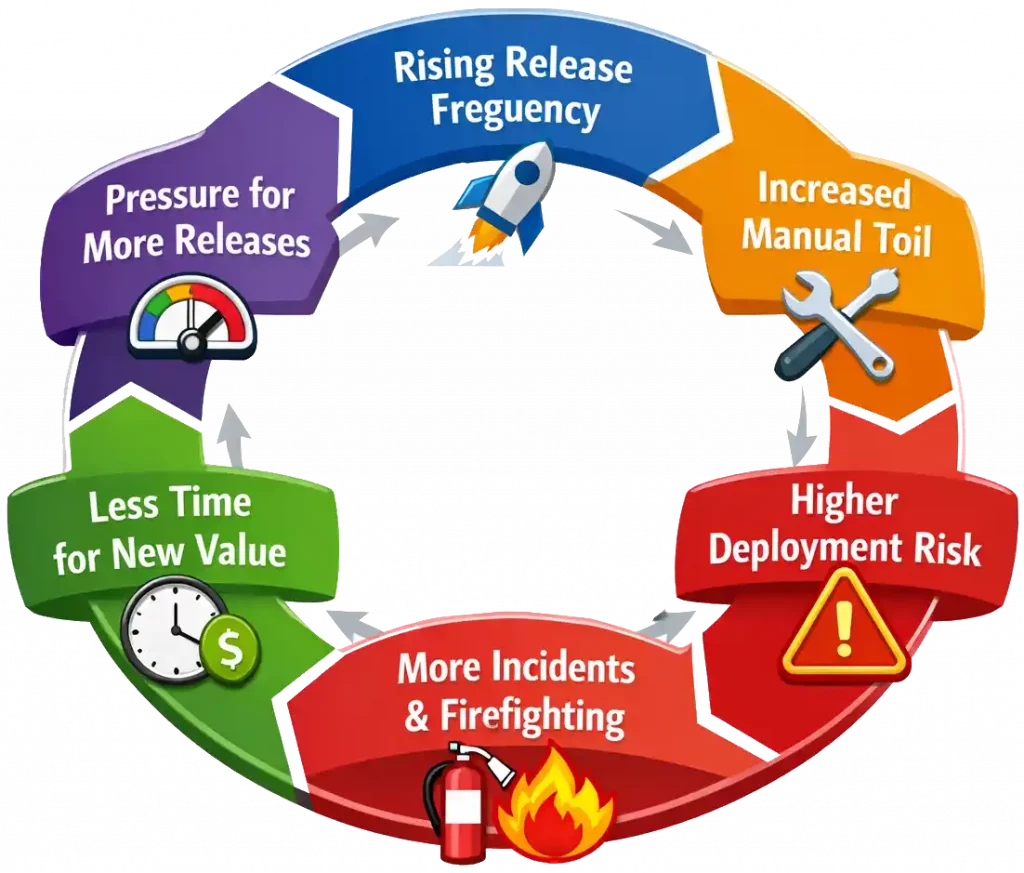
As SaaS teams scale, releases become more frequent. Confidence, however, often moves in the opposite direction. Manual approvals, late-night deployments, and rollback anxiety are signs that deployment risk is growing.
DevOps Deployment Risk Management
For DevOps for scaling SaaS companies, this matters. Frequent releases are unavoidable. Automation removes human error from the moments where mistakes are most costly.
Complete DevOps Automation Framework
For a detailed blueprint, see our guide to a Complete DevOps Automation Framework for SaaS.
Scaling DevOps Alongside the Business
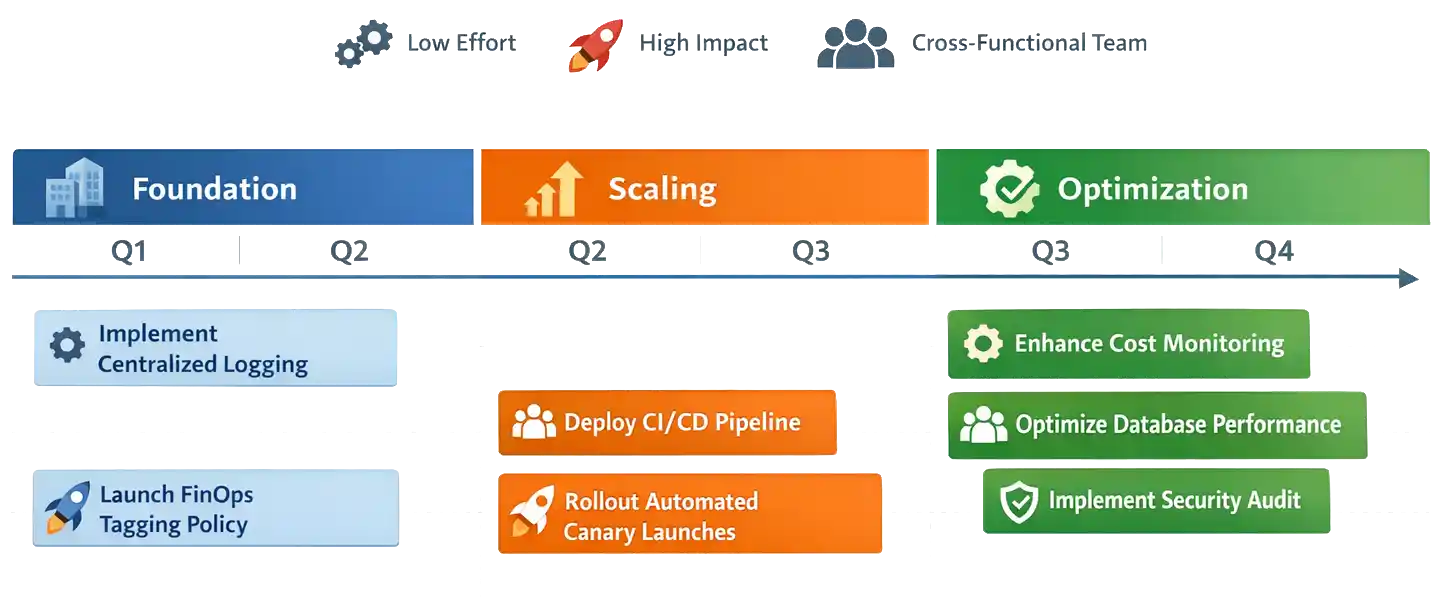
Growth puts pressure on more than infrastructure. It affects teams and workflows too. Scaling DevOps for SaaS companies requires intentional design.
DevOps best practices for SaaS scale are less about vendors and more about how teams work together. Culture and feedback loops determine whether DevOps supports growth or slows it down.
Knowing When It’s Time to Upgrade Your DevOps Approach
Not every SaaS company needs mature DevOps from day one. But there are clear signals that indicate when to upgrade DevOps for SaaS.
When these signs appear, DevOps maturity becomes foundational. Many leaders turn to DevOps consulting for SaaS at this stage to avoid costly mistakes during critical growth phases.
Measuring What Actually Matters
DevOps success is not about how many tools are in use. It is about outcomes. High-performing teams track DevOps metrics for high-growth SaaS that connect engineering effort to business impact.
These metrics make DevOps ROI for SaaS businesses visible and easier to defend at the leadership level.
Real Impact: What Strong DevOps Enables
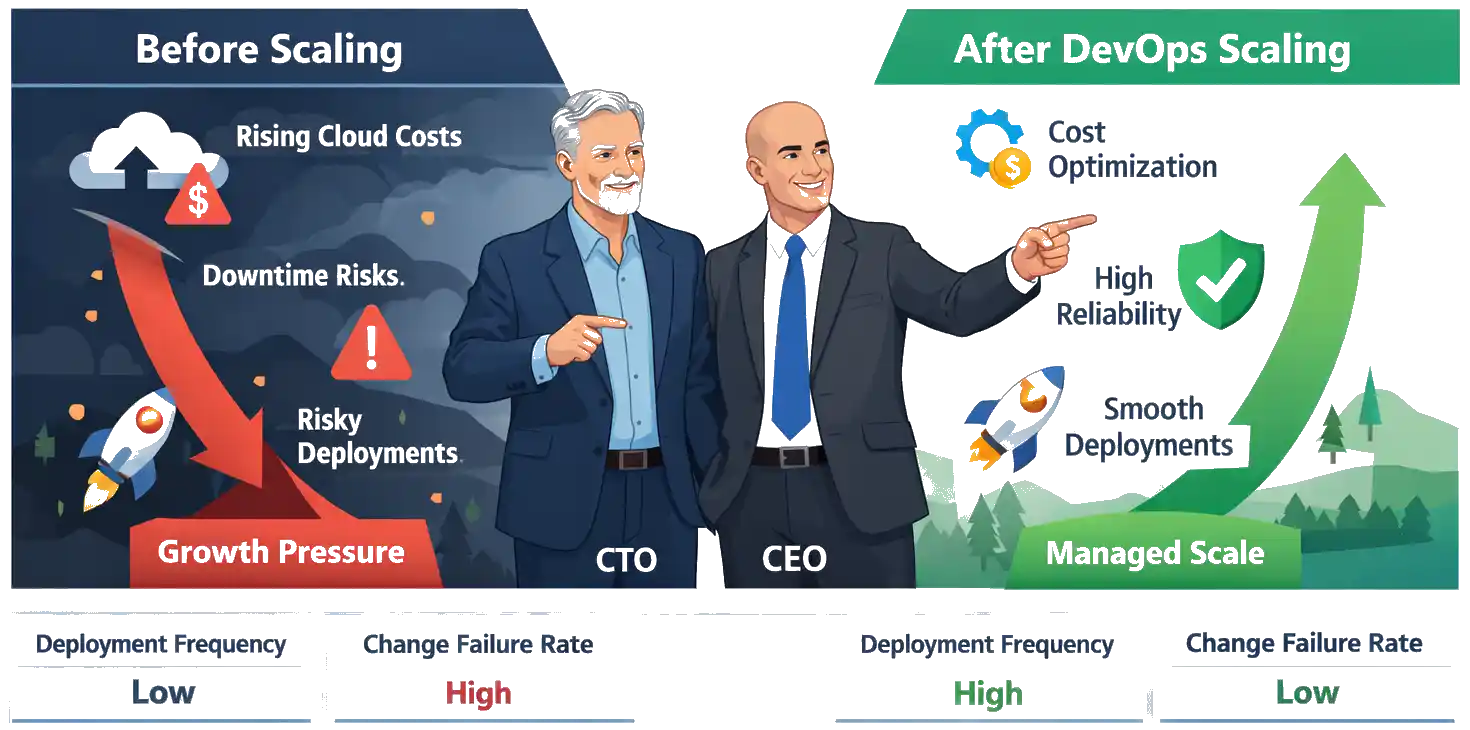
Teams with mature DevOps report similar outcomes. Faster releases without sacrificing stability. Lower operational costs even as infrastructure grows. Fewer incidents and quicker recovery when problems occur. Higher confidence across engineering teams. This is the real value of DevOps for scaling SaaS companies. Growth without constant stress.
Increased deployment frequency without sacrificing stability
Lower operational costs even as infrastructure grows
Fewer incidents and quicker recovery when problems occur
DevOps transformation services often focus on aligning people, process, and platforms so teams can maintain momentum over time.
Final Thoughts: DevOps as a Growth Multiplier
For SaaS companies that are rapidly growing and scaling, DevOps is not just an issue that is of secondary importance. It rather has a direct impact on revenue, customer trust, and operational resilience.
If DevOps for high-growth SaaS is implemented in a very careful manner, the process gets rid of uncertainty. No more unexpected costs. Minimum downtime. More secure and safe deployments.
It’s that balance which distinguishes those SaaS companies that are just barely managing to exist under pressure, from the ones that are able to still do so with confidence and even get their business grown.
Get expert guidance on implementing DevOps practices that reduce costs, minimize downtime, and eliminate deployment risks for your high-growth SaaS business.
🚀 Schedule Your DevOps Assessment

IBS
