Top Generative AI Use Cases across Industries
Table of Contents
- →Introduction to Generative AI
- →Generative AI for Digital Transformation
- →Industry-Specific Use Cases
- →Enterprise AI Strategy
- →Conclusion & Next Steps
Today, generative AI has long transcended from experimentation. From its humble beginnings as a content creation engine to its current role as an innovation enabler within enterprises, it is already widely used by many organizations across different sectors to optimize operations and transaction processing, customer experience, decision-making, and digital transformation.
Ranging from healthcare and banking to retail, manufacturing, SaaS, and customer support, the business use cases of generative AI are revolutionizing the workings of businesses.
AI Adoption Statistics
80%+
of enterprises will use generative AI APIs/models by 2026
Gartner Forecast
2x
more likely to scale AI beyond pilot stages with proper strategy
Deloitte Study
30%
reduction in equipment downtime with AI predictive maintenance
Gartner Analysis
In this blog, we are going to highlight top generative AI use cases across industries and why it is imperative for businesses to opt for a structured Generative AI strategy consulting approach for success.
Generative AI for Digital Transformation in Enterprises
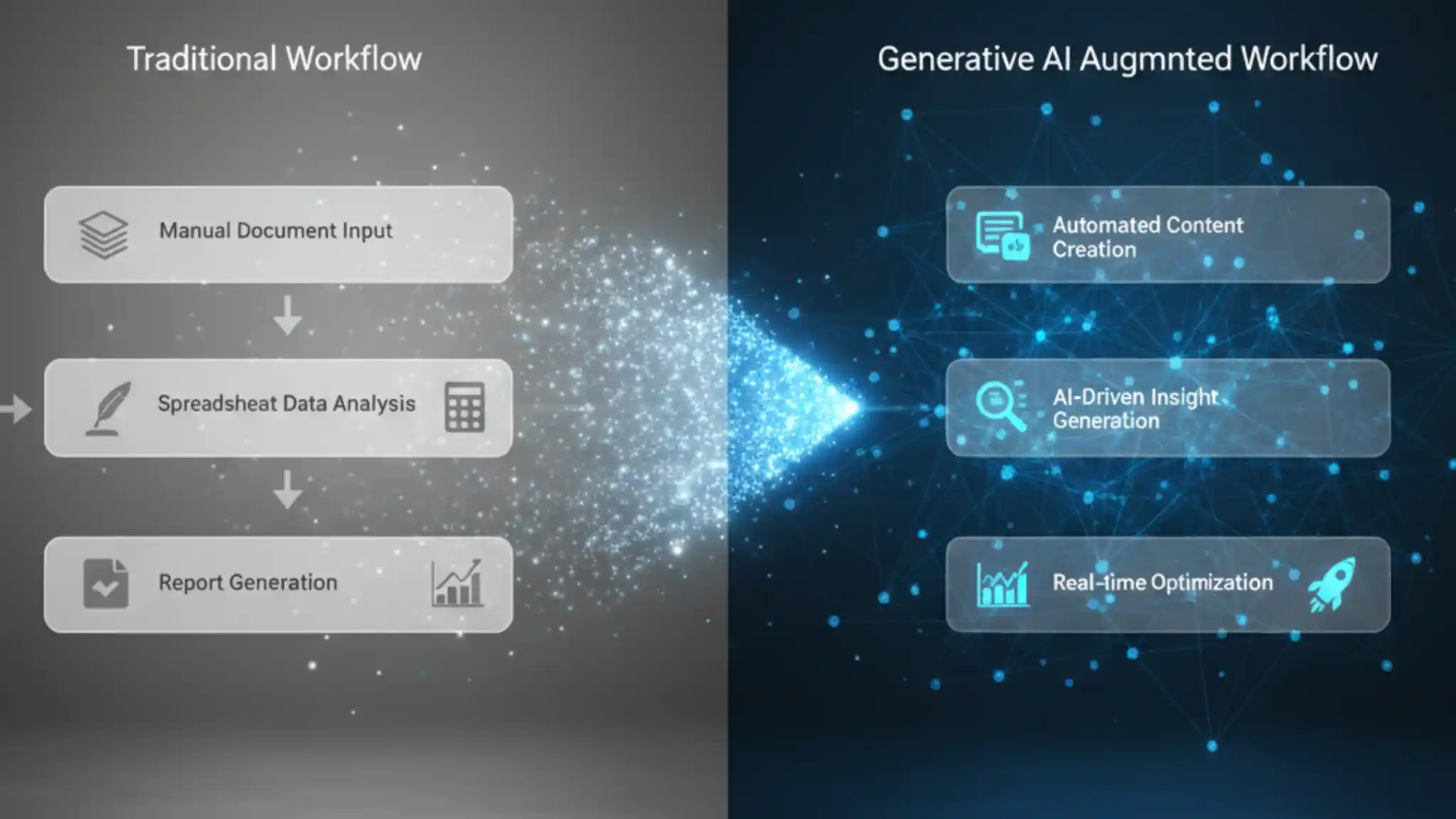
Generative AI for digital transformation is not about replacing systems overnight. It’s about augmenting existing workflows, data pipelines, and decision processes with AI-generated intelligence. Generative AI is being integrated into core business functions across enterprises, including operations, sales, marketing, customer support, and product development.
Unlike traditional AI models, which focus on prediction or classification, generative AI creates something new. This can range from text and code to images, designs, and simulations, even up to strategic recommendations. As a result, generative AI use cases for enterprises often deliver faster value compared to legacy AI initiatives.
Key Insight
Deloitte’s AI adoption studies show that enterprises that align generative AI initiatives with business objectives are twice as likely to scale AI beyond pilot stages. This highlights the importance of enterprise AI consulting and generative AI readiness assessment before large-scale deployment.
Generative AI Use Cases by Industry
Enterprise Generative AI Strategy
For enterprises, generative AI delivers maximum value when approached as a strategic capability rather than a collection of isolated use cases. Across functions such as operations, customer engagement, product development, and decision support, generative AI enables organizations to improve efficiency, accelerate innovation, and scale intelligent experiences.
1
Readiness Assessment
Evaluate data, security, governance, and workforce capabilities
2
Prioritize Use Cases
Align high-impact applications with business objectives
3
Implementation Roadmap
Define KPIs, governance, and change management
4
Scale & Optimize
Expand across departments and continuously improve
Successful enterprise adoption depends on more than selecting the right models or tools. Organizations must ensure data readiness, security, governance, and workforce enablement are in place before scaling initiatives. A structured generative AI readiness assessment helps enterprises evaluate their current capabilities, identify high-impact use cases, and address risks related to compliance, ethics, and data privacy.
Once readiness is established, a well-defined adoption roadmap becomes critical. This includes prioritizing use cases aligned with business objectives, defining measurable KPIs, and implementing change management practices to support adoption across teams. Gartner emphasizes that enterprises treating generative AI as a long-term strategic investment—rather than a point solution—are significantly more likely to achieve sustainable business value.
Enterprise AI consulting and AI transformation services play a crucial role in this journey. These services help organizations navigate model selection, architecture design, governance frameworks, and integration with existing systems. Additionally, consulting partners support workforce upskilling and operational alignment, ensuring generative AI initiatives translate into real-world outcomes.
By combining strategic planning, technical execution, and organizational readiness, enterprises can move generative AI from experimentation to production—unlocking scalable, measurable impact across the business.
Gartner emphasizes that organizations treating generative AI as a strategic capability rather than a standalone tool are far more likely to achieve sustainable value.
Conclusion
Generative AI is no longer optional for modern enterprises. From healthcare and banking to retail, manufacturing, SaaS, and customer support, generative AI use cases across industries are delivering tangible business value.
Organizations that approach generative AI adoption strategically, supported by enterprise AI consulting, generative AI readiness assessment, and AI transformation services, are gaining a competitive edge in an increasingly digital world.
Ready to Turn Generative AI Ideas into Enterprise Impact?
Many organizations struggle to move generative AI from pilots to production. The difference lies in having the right strategy, architecture, and execution partner.
Impressico Business Solutions helps enterprises identify the right generative AI use cases by industry, assess readiness, and implement scalable solutions that deliver measurable outcomes.