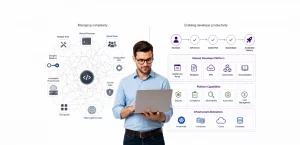
June 17, 2026
Platform Engineering for SaaS: The Next Evolution Beyond DevOps
Enjoying this article?
Share it with the world!


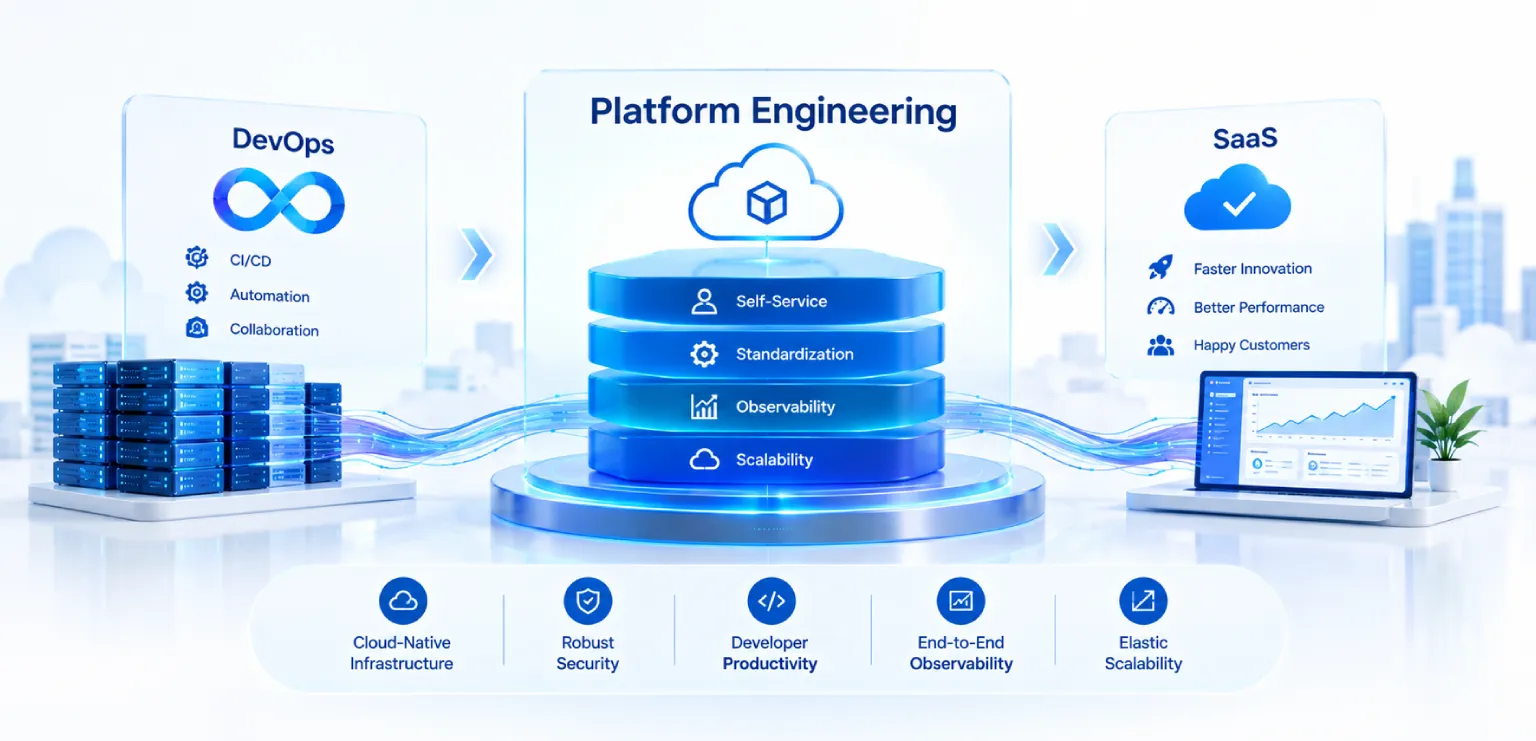
What Is Platform Engineering for SaaS? DevOps vs IDP Explained
| ⓘ QUICK ANSWER Platform engineering for SaaS is the practice of building shared internal developer platforms (IDPs) that give engineers self-service infrastructure, golden paths, and standardized workflows. It doesn’t replace DevOps — it extends DevOps with the systems needed to scale across larger engineering organizations. In this guide: why platform engineering is becoming essential for scaling SaaS companies, how IDPs reduce cognitive load, the platform engineering vs DevOps distinction, signs your team is ready, and how to measure success. |
A couple of years back, the major pain point for SaaS engineering teams was getting development and Operations to collaborate. DevOps solved that issue rather impressively. The pipeline automation, infrastructure as code, and continuous delivery practices ensured the timely and consistent releases of the software applications.
Nowadays, many SaaS companies are facing completely different challenges.
As SaaS companies expanded, so did the intricacies involved. The increasing number of microservices, cloud infrastructure, compliance issues, and engineering teams caused an unintended consequence: that developers were spending too much time dealing with internal systems and operational complexity.
Engineers spend more time dealing with internal procedures, infrastructure needs, and tooling than actually working on customer-valued functionality.
This explains why the concept of platform engineering for SaaS became such a hot topic. This doesn’t mean that platform engineering is supposed to replace DevOps practices. On the contrary, this approach creates an environment in which DevOps can flourish.
The transition towards platform engineering is already in progress.
| 80% of enterprises by 2026 | ⓘ Gartner Forecast According to Gartner, 80% of enterprises will have platform engineering groups in place by 2026 — compared to just 45% in 2022. |
This transition is because of the realization that scaling of software development cannot happen simply through automation alone. What is needed is the creation of systems to make things simpler for the developers.
DevOps Solved Delivery. Platform Engineering Solves Scale.
Where DevOps stops being enough — and what comes next
DevOps transformed how software gets built and released. It broke down silos and encouraged teams to automate repetitive processes.
However, many SaaS companies eventually reach a point where operational complexity starts slowing them down.
Different teams adopt different deployment practices. Infrastructure knowledge becomes concentrated among a few specialists. New developers spend weeks understanding internal processes before contributing meaningfully.
| Reframe: This isn’t a DevOps failure. It’s often a sign that the organization has matured. |
Platform engineering addresses these growing pains by creating shared capabilities that engineering teams can rely on instead of rebuilding similar solutions repeatedly.
Organizations still establishing DevOps consistency should first focus on strengthening that foundation. Our guide on Scaling DevOps Across Teams: A Practical Checklist for SaaS Organizations explores the practices that support sustainable engineering growth before expanding into platform engineering initiatives.
| The Engineering Evolution for Scaling SaaS
Each stage builds on the previous — platform engineering extends DevOps rather than replacing it The natural progression for engineering organizations as they scale |
Why Internal Developer Platforms Are Becoming Essential
A well-designed operating system for your engineering organization
At the center of modern platform engineering sits the internal developer platform (IDP).
An IDP is designed to make developers’ lives easier. Instead of waiting for approvals or manually configuring environments, teams gain access to self-service infrastructure and standardized workflows that help them move faster.
Think of it as creating a well-designed operating system for your engineering organization.
A mature internal developer platform often includes:
|
|
| |||
|
|
|
| ▪ Self-service environment provisioning ▪ Automated deployment pipelines ▪ Infrastructure templates ▪ Security and compliance guardrails ▪ Centralized documentation ▪ Service catalogs and observability capabilities |
Platforms such as Backstage, originally developed by Spotify, have helped popularize this approach by creating unified developer experiences across complex engineering environments.
The real value of an IDP isn’t just operational efficiency. It allows developers to focus on delivering features instead of navigating internal friction.
The Hidden Cost of Cognitive Load
Engineering productivity isn’t only about how often teams deploy code. It is also influenced by how much mental energy developers spend managing complexity.
This is where cognitive load becomes important.
| The Reality: A developer hired to improve customer experiences shouldn’t spend hours understanding deployment rules, security approvals, or which infrastructure pattern another team chose six months ago. |
Yet this happens regularly in growing SaaS organizations.
The more operational decisions developers must make, the less capacity they have to innovate.
| ⓘ Research Insight Research by DORA (DevOps Research and Assessment) continues to reveal how the efficacy of developers is a result of the systems within which development teams work. |
The elimination of unnecessary complexity helps enhance developer productivity because it enables developers to focus on solving business problems rather than spending time handling operational complexities.
| Developers Spending More Time on Infra Than Product? If onboarding is dragging, microservices are multiplying, and engineers are stuck navigating internal complexity, we can walk through what a practical platform engineering roadmap looks like for your team. |
Building Golden Paths Without Slowing Teams Down
One concern organizations often have is whether platform engineering limits flexibility.
The opposite is usually true.
Effective platform teams establish golden paths that simplify common development workflows. These recommended approaches incorporate proven practices for building, deploying, and operating software.
This paved road approach gives developers an efficient default path while preserving flexibility when specialized requirements emerge.
| The Goal: Not rigid standardization. It’s making the right choice the easiest choice. |
Strong platform teams focus on reducing friction without creating unnecessary bureaucracy. When done well, developers gain autonomy because they no longer need to reinvent infrastructure decisions for every project.
| Flexibility Without Bureaucracy Worried platform engineering will lock teams in? Done well, golden paths create autonomy — not constraint. Our team designs platforms that give engineers a fast default path while preserving flexibility for specialized needs. |
Platform Engineering vs DevOps: Understanding the Relationship
Not competitors — complementary disciplines that solve different problems
Conversations around platform engineering vs DevOps often frame the two as competing approaches.
In reality, they solve different problems.
|
|
The strongest organizations treat them as complementary disciplines rather than alternatives.
For a deeper comparison of these operating models, explore our guide on Platform Engineering vs DevOps vs SRE.
Measuring Success Beyond Tool Adoption
Successful platform engineering initiatives are not measured by the number of templates created or tools implemented.
The focus should always remain on outcomes.
Some indicators worth tracking include:
|
|
| |||
|
|
|
| ▪ Faster onboarding experiences ▪ Improved deployment frequency ▪ Reduced lead times for changes ▪ Fewer infrastructure-related bottlenecks ▪ Higher platform adoption rates ▪ Better developer experience (DevEx) |
Improving developer experience (DevEx) isn’t simply about making developers happier. It directly influences engineering efficiency, product delivery, and business agility.
Signs It May Be Time to Invest in Platform Engineering
Patterns that suggest the timing may be right for your SaaS org
Not every SaaS organization needs a dedicated platform engineering function immediately.
However, certain patterns suggest the timing may be right:
|
When these challenges begin affecting delivery speed, platform engineering often becomes a practical next step.
Creating Scalable Engineering Systems
The organizations seeing the greatest success with platform engineering share one characteristic: they treat their platforms as products.
| Platform as Product: They collect feedback. They understand developers’ needs. They continuously improve usability. |
This mindset transforms platform engineering from an infrastructure initiative into a business capability.
At Impressico Business Solutions, we provide scalable engineering ecosystem development by way of platform engineering practices that cater to the goals and requirements of the organization in question. This ranges from crafting platform roadmaps to building internal developer platforms.
Conclusion
The DevOps model transformed the software delivery processes in SaaS companies. The next step is covered by platform engineering.
Creating an environment where the cognitive load is lowered, the developer experience (DevEx) is improved, and self-service infrastructure capabilities are delivered by means of proper internal developer platform construction allows scaling of operations without slowing them down.
Platform engineering for SaaS does not imply anything other than the provision of conditions under which developers can concentrate on product creation.
| Key Takeaways
|
FAQ
| What is platform engineering? Platform engineering is the practice of building and maintaining shared internal platforms that simplify software development and delivery through standardized, self-service experiences. |
| How is platform engineering different from DevOps? The discussion around platform engineering vs DevOps is not about choosing one over the other. DevOps focuses on culture and collaboration, while platform engineering provides the systems needed to scale those practices. |
| Do teams still need DevOps with platform engineering? Yes. Platform engineering complements DevOps by extending its principles into reusable platforms that support larger engineering organizations. |
| What is an internal developer platform (IDP)? An internal developer platform (IDP) is a collection of tools, workflows, and services that provides developers with self-service access to infrastructure while maintaining governance and consistency. |
| Scalable Engineering Systems Build engineering platforms that scale with your SaaS. From crafting platform roadmaps to building internal developer platforms, our team helps SaaS organizations design platform engineering practices that fit their goals — not generic templates. |

IBS
Similar articles

Shift-Left Security in CI/CD Pipelines: A Practical Playbook
September 4, 2026
DevSecOps: Shifting Security Left Without Slowing Delivery
September 2, 2026
Is Your Engineering Team Ready for Platform Engineering? A Readiness Checklist
August 12, 2026
Measuring Platform Engineering ROI: DORA and SPACE Explained
July 31, 2026
Internal Developer Platforms: Building a Golden Path for Engineering Teams
July 22, 2026
AIOps in Practice: Using AI to Cut Incidents and MTTR
July 6, 2026